Biography

A Life
in Art

From a young woman on stage in Tehran to an independent voice abroad, Mina Lakani’s journey has been shaped by art, conviction, and a deep belief in the power of storytelling.

Explore the biography

For Mina Lakani, art has remained a way to stay human.Mina Lakani · Actress

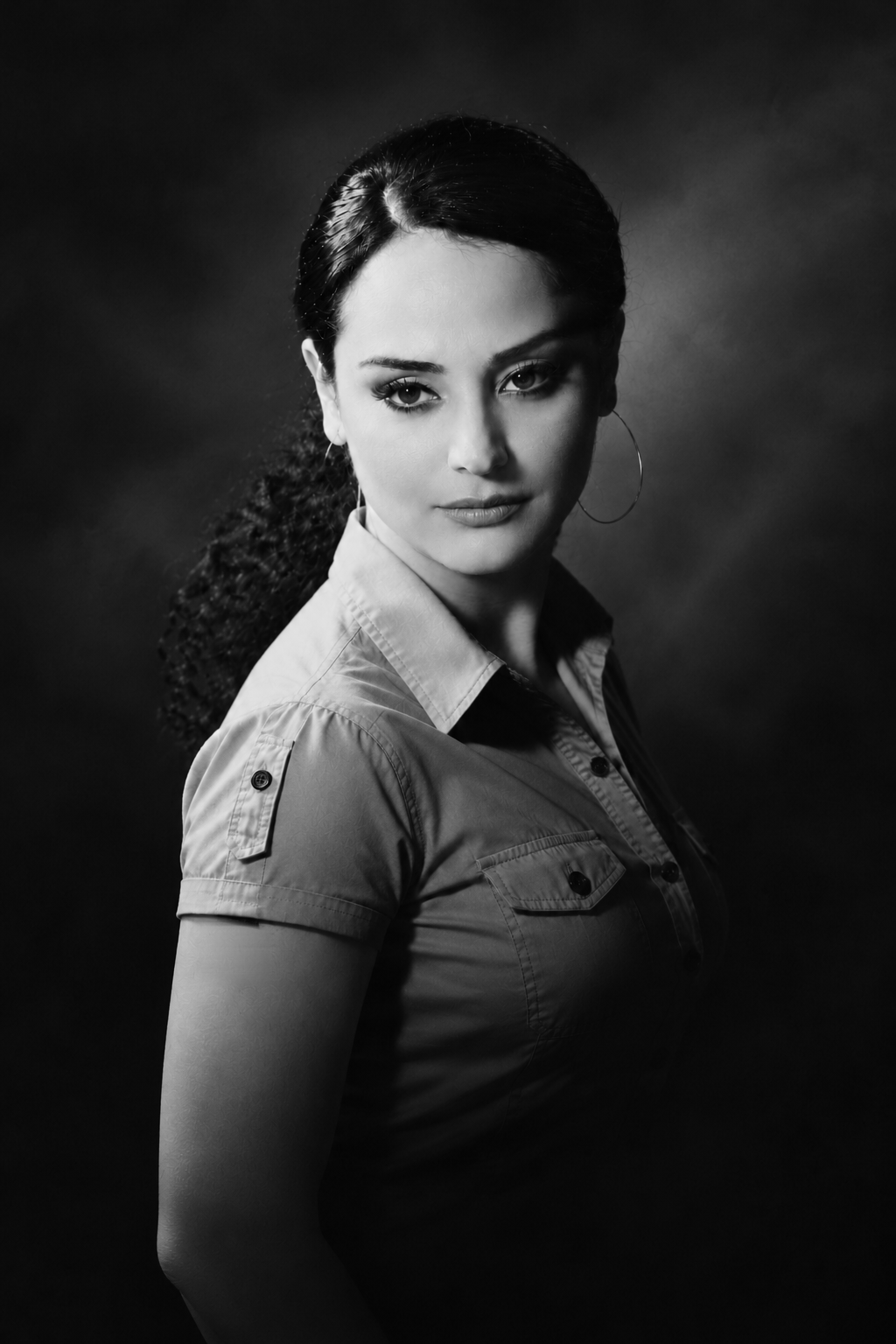
Mina Lakani, studio portrait

Beginning

Acting found her through a moment of destiny

Mina Lakani entered the world of theatre on her eighteenth birthday, at the beginning of her nineteenth year, when an unexpected invitation led her to rehearsals for Shakespeare’s Hamlet. That first encounter marked the beginning of a professional acting career that would span nearly two decades across theatre, cinema, and television in Iran.

Professional Years

A professional life across stage and screen

Over the years that followed, Lakani worked across theatre, cinema, television, televised theatre, and screen projects. Her career developed through a combination of stage discipline, lead and supporting screen work, and a continuing interest in performance as a serious artistic practice.

The surviving photographs, credits, published interviews, and critical writing preserved on this website document only part of that professional history, but together they form a record of a sustained acting career.

Challenges & Restrictions

The work existed within limits that shaped the life around it.

Lakani’s professional years in Iran unfolded within a cultural system in which artists, and women in particular, worked under a range of legal, institutional, and social restrictions. Some of those realities remain visible in the archival record itself, including the compulsory dress requirements imposed on women in public and professional media.

As her career progressed, the distance between professional opportunities and her personal values and convictions became increasingly apparent. Over time, that conflict deepened until it could no longer be ignored.

Turning Point

A career can continue while still reaching a point of departure.

For Lakani, the decisive question eventually became larger than the next role. Continuing within the professional world she had built increasingly conflicted with what she was willing to accept personally and ethically. She ultimately chose to leave Iran in 2010, stepping away from a professional life she had spent nearly twenty years establishing.

The years that followed were not simply a continuation of the same career in another country. They became a different chapter, shaped by displacement, rebuilding, and the effort to remain faithful to her convictions.

Public Voice

Leaving Iran: a public testimony

Broadcast appearances and interviews form another part of Lakani’s documented public history. Surviving material includes a formal Sahar International television interview and her September 2011 appearance on Voice of America Persian’s Shabahang, hosted by Behnood Mokri, a prominent VOA Persian presenter. At the time, Shabahang was described as one of VOA Persian’s most-watched programs, with a substantial following in Iran and among Persian-speaking audiences abroad.

In that interview, Lakani spoke publicly about the circumstances that led her to leave Iran, giving a first-person account of the decision that changed the course of her life and career.

The surviving recordings are preserved here as documentary material: the complete Shabahang interview, together with a focused excerpt in which Mokri asks Lakani about the emotional difficulty of leaving Iran after building her professional life across theatre, television, and cinema.

Broadcast Archive · Documentary Record

A Voice in the Archive

A surviving broadcast interview preserving Mina Lakani’s reflections on her professional life, presented here through her voice and words.

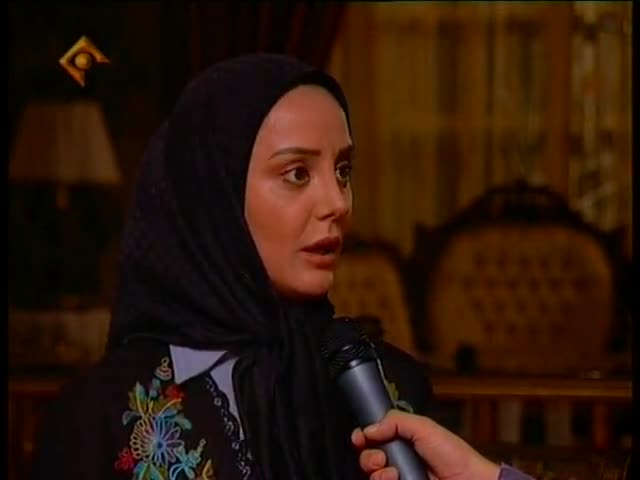
Selected archival excerpt from Sahar International Television. Original broadcast audio with English subtitles.

Recorded for Sahar International following the Bosnian-language broadcast of the television series Taraneh Madari (ترانهٔ مادری), the interview forms part of a broader conversation about Mina Lakani’s career and preserves her reflections on a professional life spanning stage, cinema, and television.

The video presented here is a brief excerpt from the original interview, which lasted approximately 42 minutes.

The original broadcast reflects compulsory dress requirements imposed on women working in Iranian state-controlled media at the time. The clothing shown in this archival footage should not be read as a statement of Mina Lakani’s personal beliefs or present identity.

The Work · Hasti

Approaching a Role

A performance is seen on screen; the thought behind it is less often preserved. This surviving recording from the production of Hasti offers a brief glimpse of Mina Lakani speaking about her role, alongside moments from the set.

Mina Lakani speaking about her role during the production of Hasti
Mina Lakani in conversation during the production of Hasti.
Watch the excerpt
Approved English-subtitled montage · Original Persian audio.

Source: Shoma va Sima · Production footage and interviews.

The clothing shown reflects compulsory dress requirements imposed on women in Iranian state-controlled media at the time, rather than Mina Lakani’s personal beliefs or present identity.

Perspective

What remains after the roles.

Looking back, Mina Lakani does not measure an artistic life only by roles, recognition, or public visibility. For her, a career also carries a responsibility to remain answerable to conscience. When continuing within Iran’s state-controlled cultural system came into conflict with that principle, she chose to leave the professional world she had built rather than remain within a system she could no longer accept.

That choice did not make the years that followed easier, nor has she ever sought to portray it as an act of heroism. The decision came at a profound professional cost. Yet, despite the consequences, she has remained faithful to the convictions that guided her choice, and her conscience remains clear.

Her experience has left her with a belief that transcends the boundaries of any country or profession:

Success loses its true meaning when it comes at the cost of personal integrity and moral conscience.

This archive preserves not only the work, but also the choices that shaped the life around it.